If you’re a property owner facing eminent domain in North Carolina, you’ve probably heard the terms “total taking” and “partial taking.” But what do they actually mean for you, your property, and your rights? In this guide, we’ll break down the key differences between total taking vs partial taking in North Carolina, explain how each one affects compensation, and help you understand what to expect if your land is targeted for a public project.
What Is Eminent Domain in North Carolina?
Eminent domain is the power the government (and sometimes private companies) has to take private property for public use. This might sound scary, but it’s a process with rules, protections, and specific steps. In North Carolina, eminent domain actions often happen for things like new highways, utility lines, schools, or other public needs. The government must follow legal procedures and pay you “just compensation” for whatever property they take.
Not all eminent domain seizures are the same. Sometimes, they take your whole property. Other times, only a slice is needed. That’s where the question of total taking vs partial taking in North Carolina comes into play.
Defining Total Taking and Partial Taking
Let’s start with clear definitions.
A total taking happens when the entire property is acquired. You no longer own any part of it after the process is finished. For example, if your house sits right in the path of a new highway and the state needs the whole lot, that’s a total taking.
A partial taking is when only part of your property is acquired. Maybe the government needs a strip of your land for a road widening project, but you still keep your house and most of your yard. Partial taking is actually more common than you might think.
Understanding which type applies to your situation is crucial because it changes how compensation is calculated and how your rights are protected.
How Total Taking Works in Practice
When a total taking occurs, you’re required to give up your entire property, land, buildings, and any improvements. For most people, this means moving out and finding a new place to live or do business. Here’s what you should know:
- The government or condemning authority will appraise your entire property based on its market value.
- If you accept the offer, you’ll get paid and transfer ownership.
- If you don’t agree with the offer, you have the right to negotiate or challenge it in court.
- Relocation assistance is sometimes available, especially if you’re losing your home or business.
In North Carolina, total taking is more likely in situations where the property is small, the planned project covers the whole lot, or what’s left after a partial taking would be unusable (called “uneconomic remnants”).
How Partial Taking Works in Practice
Partial taking is when only a portion of your land is needed. This is common for road expansions, sidewalks, power lines, or pipelines. Here’s how the process usually plays out:
- The government determines exactly how much land they need, maybe a few feet along the edge, or a corner of a bigger lot.
- Appraisers calculate the value of the part taken, plus any decrease in value to what remains (your “remainder” property).
- You’re paid for both the land actually taken and the damage to what’s left over. Sometimes, the leftover land is less useful or less valuable, this is called “severance damages.”
- You may lose access, parking, or privacy, depending on the project.
Partial takings can be complicated because they affect not just the piece acquired, but also what remains. That’s why careful appraisals and sometimes legal help are important.
Compensation Differences: Total vs Partial Taking
The amount you’re entitled to depends on which type of taking applies.
For a total taking, you’re generally owed the full, fair market value of your entire property as if it were sold in a normal transaction. In North Carolina, this value should reflect the property’s “highest and best use,” not just its current use.
For a partial taking, things get more complex. Compensation is usually calculated as the value of what’s taken, plus any reduction in value to the remaining property. For example, if losing part of your yard means your house is now too close to the road, or you lose access, you may be owed additional money for those impacts.
In both cases, you have the right to dispute the offer if you don’t believe it’s fair. North Carolina law gives you the chance to present your own evidence or hire your own appraiser.
Practical Examples: What Does It Look Like for Owners?
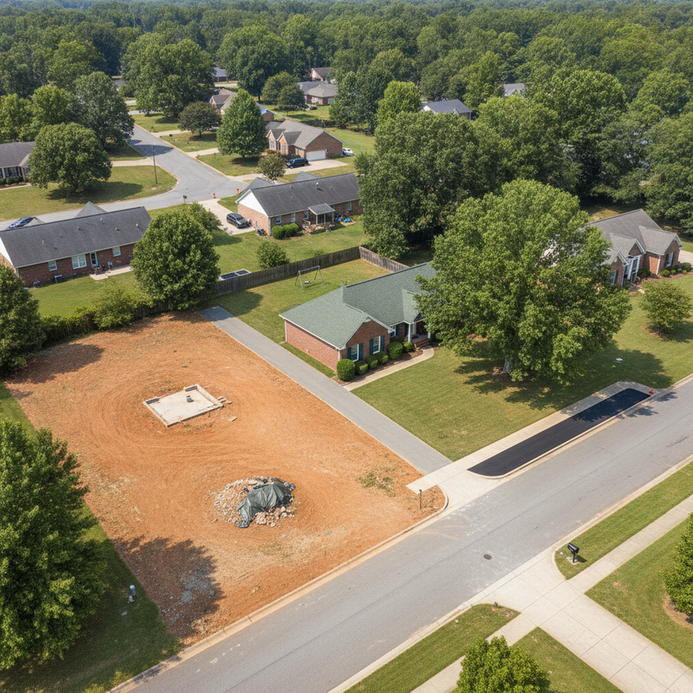
Let’s look at a few everyday examples to make the difference between total taking vs partial taking in North Carolina crystal clear.
- Imagine your home sits right where a new highway will go. The government needs your entire lot and house. You must move out, and you’ll be compensated for the whole property.
- Now picture the highway is just expanding by a lane. The state only needs a 15-foot strip along the front of your property. You keep living there, but maybe your fence moves, or your driveway gets shorter. You get paid for the land they take and any extra loss in value to your property.
- Sometimes a partial taking leaves you with an odd-shaped leftover piece that’s too small or awkward to use. In North Carolina, if what’s left is considered “an uneconomic remnant,” you may be able to require the government to buy the entire property.
Every project is different, so understanding how much land is being taken and how it affects your property is key.
The Process: What to Expect If You’re Facing a Taking
If you receive a notice about a possible taking, here’s what generally happens next:
- You’ll get official paperwork explaining what’s planned and which type of taking is proposed.
- An appraiser will visit your property. It’s important to cooperate but also to ask questions.
- You’ll receive an offer. If it’s a total taking, the offer covers everything. If it’s a partial taking, the offer should include both the land acquired and any damages to what’s left.
- You can accept the offer, negotiate, or challenge it in court if you disagree.
- If you must move, you may qualify for relocation assistance.
It’s a good idea to keep records, get your own appraisal if needed, and reach out for help if you feel overwhelmed. Many property owners find it helpful to talk with professionals who know North Carolina eminent domain law.
Your Rights and Next Steps
Property owners have important rights during any eminent domain process in North Carolina. You have the right to:
- Receive notice before anything happens.
- Get a fair offer based on a professional appraisal.
- Challenge the amount if you think it’s too low.
- Be paid promptly if the taking goes forward.
- Request that the government buy the whole property if a partial taking leaves you with an unusable piece.
No matter if you’re facing a total taking or a partial taking, it’s smart to get informed and speak up for your interests. The rules are meant to protect you, but understanding them helps you get the best outcome.
Image Placeholder
Featured image alt text: A North Carolina property split in two, with one side clearly marked as taken for a highway project and the other side remaining residential, showing the difference between total and partial taking.
AI image prompt: “Aerial view illustration of a North Carolina suburban property, with one half highlighted and labeled as ‘Taken for Public Project’ (total taking), and the other half showing only a narrow strip along the edge marked as ‘Taken’ (partial taking), with visible differences in land use and impact.”
Conclusion
Understanding the difference between total taking vs partial taking in North Carolina can make a huge difference for property owners. The type of taking shapes your rights, your compensation, and the next steps you should take. If you’ve received a notice or have questions about your situation, contact us to learn more.