Ever wondered what happens when the government affects your property without officially taking it? In North Carolina, that situation is called inverse condemnation. It may sound complicated, but if you own property near a new road, utility, or public project, you could face it. This post explains what inverse condemnation means in North Carolina, how it works, and what steps you can take if your property is impacted.
Understanding Inverse Condemnation
Inverse condemnation is a legal process where a property owner sues the government because their property has been taken or damaged for public use – but the government didn’t follow the usual eminent domain steps. In regular eminent domain, the government files a case and offers compensation before taking your land. In inverse condemnation, it’s the other way around. You, the owner, have to take action when the government’s actions affect your property, and they haven’t paid you for it.
This situation often comes up when a public project – like a road widening, new power line, or drainage change – hurts your property’s value or use. Maybe your land floods after a state project, or a new highway cuts off access to your driveway. If the government hasn’t offered payment, you have the right to ask for compensation through an inverse condemnation claim.
When Does Inverse Condemnation Happen in North Carolina?
Inverse condemnation in North Carolina can occur in several common situations. Here are a few examples so you can see how it might affect you:
- A new highway or road project blocks your main access road or makes it much harder to get to your property.
- Construction by a city or state agency causes frequent flooding or stormwater problems on your land.
- A utility company installs power lines, pipes, or towers on your property without a formal agreement or proper payment.
- Changes in nearby land (like raising a road or building a dam) lower your property value or limit how you can use your land.
In each of these cases, the government or a public agency may not officially “take” your land through the normal eminent domain process. But if their actions damage your property or limit your rights, you can pursue an inverse condemnation claim.
The Legal Basics: How Inverse Condemnation Works
In North Carolina, both the state constitution and statutes protect property owners from having their property taken without fair compensation. But the process for inverse condemnation is different from regular eminent domain. Here’s a simple overview of how it works:
First, you need to show that a government action has taken or damaged your property for public use. This doesn’t always mean a physical taking. Sometimes, it’s something like repeated flooding, blocked access, or the loss of value caused by a nearby public project.
Next, you have to file a lawsuit against the government agency responsible. The burden is on you, the property owner, to prove that your property has been affected and that you deserve compensation. The government can argue back, saying the changes didn’t actually amount to a “taking” or that the impacts aren’t as bad as you claim.
If the court agrees with you, it will order the government to pay for the value lost or the damages caused. Usually, this includes the fair market value of the property lost, or the decrease in value if the property is still usable but less valuable. Sometimes, it also covers costs like loss of access or physical damage to the land.
Key Legal Points to Know
- Inverse condemnation claims are based on the Fifth Amendment, which says the government can’t take private property for public use without just compensation. North Carolina law follows this rule, and local statutes give more detail.
- You only have a certain amount of time (the statute of limitations) to file an inverse condemnation claim. In North Carolina, it’s usually two years from when you first notice the problem.
- Not every negative impact is enough for inverse condemnation. Normal inconvenience, traffic, or noise from public projects usually doesn’t count. The damage has to be significant and connected to a public use.
How to Start an Inverse Condemnation Claim
If you believe you’ve been affected by inverse condemnation in North Carolina, here’s what you need to do:
- Document the changes. Take photos, write down dates, and note exactly how the government project has hurt your property.
- Check if the government or agency has already started any formal eminent domain process. If they have, you may need to follow that path instead.
- Talk to a lawyer who understands North Carolina eminent domain law. These cases can get complicated, and you’ll need to prove both the government’s actions and the impact on your property.
- If you move forward, your attorney will file a lawsuit in the correct court. You’ll present evidence, and the government will respond. The court will decide if a taking has happened and, if so, how much compensation you should get.
Many property owners worry about the cost and stress of legal action. But in some cases, the law allows you to recover attorney’s fees if you win.
What Counts as a “Taking” or Property Damage?
The big question with inverse condemnation is whether the government’s actions actually “took” your property or caused enough damage. Here are some common examples that might count:
- Your property floods regularly after a new public drainage system is built nearby.
- A road project permanently blocks your only driveway, making your home or business hard to reach.
- The state builds a power line through part of your land without paying you for an easement.
But not every inconvenience qualifies. If construction is noisy for a few months or traffic increases near your house, that’s usually not enough. The damage must be permanent or seriously affect your ability to use, enjoy, or profit from your property.
Real-World Examples in North Carolina
To make this clearer, let’s look at a few real-life situations from North Carolina:
A family in eastern North Carolina owned a farm next to a new highway. After the road was built, stormwater runoff started flooding their fields every year. The state didn’t pay for the damage, so the family filed an inverse condemnation claim. The court found that the state’s project changed the natural water flow and damaged their land, so they received compensation.
In another case, a small business owner lost a large part of his parking lot when a city built a new sidewalk and didn’t pay him for the lost space. He proved that the change made it much harder for customers to park, which hurt his business. The court agreed this was a compensable taking.
How Compensation is Determined
If you win an inverse condemnation case in North Carolina, how much can you expect to receive? The law says you should be paid “just compensation.” Here’s what’s usually considered:
- The fair market value of the property actually taken.
- The reduction in value to the property you still own, if the taking makes it less useful or valuable.
- Sometimes, other damages, like loss of access, cost to repair physical damage, or impact on business revenue.
Appraisers, engineers, and other experts are often involved to figure out the right amount. Keep in mind, every situation is unique. The compensation can be negotiated, or it might be decided by a judge or jury.
Steps You Can Take if You Suspect Inverse Condemnation
If you think a government project is affecting your property, don’t wait too long. Here’s what you should do next:
- Gather all records and photos showing how the property has changed.
- Talk to neighbors or other property owners nearby – they may be experiencing similar problems.
- Reach out to a professional who understands inverse condemnation in North Carolina. They can review your case and help you decide if you have a claim.
- Don’t be afraid to stand up for your rights. Property owners in North Carolina have strong legal protections, but it’s up to you to take the first step.
[Inline Image Placeholder]
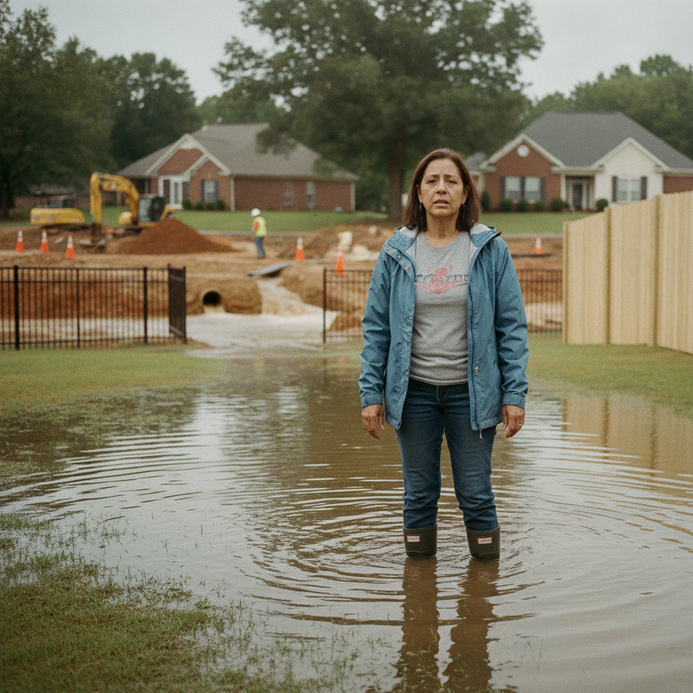
alt text: A North Carolina homeowner looking over a flooded backyard caused by nearby road construction, showing clear property damage and concern.
Prompt: Realistic photo of a middle-aged North Carolina homeowner standing in a backyard partially flooded due to nearby road construction, with a visible expression of concern. Daylight, residential setting, clear evidence of property damage.
Conclusion
Inverse condemnation in North Carolina gives property owners a way to seek fair compensation when government projects damage or limit the use of their land. Understanding your rights is the first step if you think you’ve been affected. Contact us to learn more.