What Is Inverse Condemnation?
If your property has flooded because of public construction or government projects, you’re not alone. Many North Carolina property owners face similar challenges every year, sometimes after years of never experiencing flooding. But did you know there’s a legal process called inverse condemnation that might help you seek compensation?
Inverse condemnation is a concept tied to property rights under both the U.S. and North Carolina constitutions. It gives you, the property owner, a way to ask for fair compensation if the government damages or effectively takes part of your land without officially using eminent domain. This guide explains flooding inverse condemnation in North Carolina, your rights, and steps to take if your property has been affected.
How Flooding Becomes a Legal Issue for Property Owners
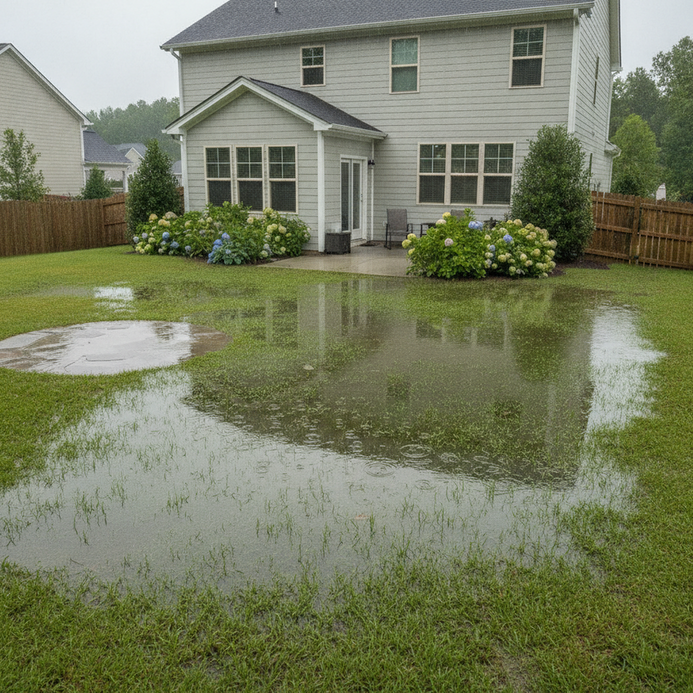
When most people think of eminent domain, they picture a government agency taking land outright for a new road, school, or utility line. But sometimes, the impact is less obvious. For example, a city might build a new drainage system, highway, or dam upstream from your property. If those changes alter how water moves through the area, it can lead to flooding that never existed before.
Let’s say your backyard stayed dry for decades. Then the county widens a road and re-routes water drainage. Suddenly, after heavy rain, your land becomes a pond and your basement floods. Or maybe a new public park with paved trails redirects runoff toward your vegetable garden. These are not just bad luck. If the flooding is a direct result of a government project or change, it can rise to a “taking” under North Carolina law.
It’s important to understand that it doesn’t matter whether the government meant to cause flooding. What matters is the effect. If the use or value of your property drops because of repeated or severe flooding caused by a public project, you may have the right to compensation, even if the government never formally seized your land.
Inverse Condemnation Explained
Inverse condemnation is a legal claim you can make when the government’s actions result in damage to your property, but they haven’t gone through the usual process of eminent domain. In short, you’re saying, “The government caused harm to my land, so they should pay for it.”
Here’s how it usually plays out in North Carolina:
- The government builds or changes something nearby, a road, bridge, retaining wall, or public facility.
- As a result, your land experiences new or worse flooding, erosion, or other serious harm.
- You file an inverse condemnation claim in court, arguing that the damage is so significant it amounts to a partial or total taking of your property.
This process can be complex. You’ll need to prove that the flooding is directly tied to the government project and that it’s more than a minor inconvenience. For example, if flooding is now a regular event where it never was before, or if you’ve lost the use of part of your land, courts may see that as a taking. They examine the frequency of flooding, the extent of damage, and whether the government acted reasonably or could have prevented the harm.
How Flooding Inverse Condemnation Works in Practice
Suppose you own a small business with a parking lot. The city builds a new road, raising the level of the street. After every storm, water now flows down your driveway and pools in your lot, making it unusable for days. You document the damage, gather records of lost business, and find that other nearby properties are dealing with the same problem. You try contacting the city, but the issue isn’t fixed. In this case, an inverse condemnation claim may be your best option to recover the costs and losses.
Or, imagine you run a family farm. The county installs a new bridge upstream, and now your fields flood during spring rains, washing away topsoil and destroying crops. If you can show that the bridge changed the water flow and the flooding is new or worse than before, you may have a strong case.
Steps to Take If Your Property Floods After a Public Project
Maybe you’ve noticed water pooling where it never used to, or you’ve suffered a ruined basement since a nearby construction project wrapped up. What should you do?
-
Document the Damage
Every time flooding occurs, take clear photos and videos. Show the extent of the water, any damage to structures, landscaping, or personal property. Keep detailed notes about dates, times, and the weather conditions. Save any repair bills, estimates, or receipts for property cleanup. The more thorough you are, the better your case will be. -
Track the Project Timeline
Record when the government project started and ended, and when you first noticed the flooding. Did the flooding coincide with new construction or changes to drainage? Is it getting worse as time goes on? Keep copies of public notices, construction updates, or news articles about the project. -
Talk to Neighbors
If other property owners nearby are affected, reach out and compare notes. It’s common for flooding to impact an entire street or neighborhood after a major project. Group complaints can sometimes draw more attention from officials and strengthen your legal claim. -
Contact Local Officials
Report the flooding to your city, county, or the agency responsible for the project. Sometimes, the problem can be fixed quickly with new drainage or repairs, but don’t count on it. Always keep records of your communications, including emails, letters, or notes from phone calls. -
Consult a Property Rights Attorney
Inverse condemnation law can be tricky. A North Carolina attorney who understands property rights and flooding cases can help you weigh your options. They may consult with engineers or other experts to trace the source of the flooding, estimate damages, and build a strong case. Many initial consultations are free or low-cost, so don’t hesitate to ask questions early.
How North Carolina Courts Decide Flooding Inverse Condemnation Cases
North Carolina courts look at all the facts before deciding whether to award compensation for flooding. Here’s what they usually consider:
- Did the government or a public agency take action that changed water flow, drainage, or land grading in a way that affected your property?
- Was the flooding caused or made worse by that action, not just by heavy rain or natural events alone? For example, was there a clear link between the project and the new water problems?
- Is the flooding frequent, ongoing, or causing major damage or loss of use? Occasional puddles probably won’t count, but repeated basement floods, ruined crops, or loss of business might.
Courts often rely on engineering studies, expert testimony, and historical weather data. They may review old maps, talk to long-time residents, or look at photos from before and after the project. Sometimes, they’ll examine whether the government could have used a less harmful design or ignored warnings about possible flooding.
The law doesn’t require the government to guarantee your property will never flood, but it does require them to act reasonably and not create new flooding risks through their projects. What counts as “significant” damage depends on the facts. For a homeowner, it might be a flooded basement and loss of access to part of the yard. For a business, it could be lost income from customers avoiding a soggy parking lot. For a farmer, it might mean ruined harvests or erosion that can’t be easily repaired.
Recent Examples and Landmark North Carolina Cases
There have been several notable flooding inverse condemnation cases in North Carolina, and each helps explain how the law works in real life.
One example involved property owners whose land began to flood regularly after the state built a new highway nearby. The road construction changed how water drained in the area, and engineers were able to map out exactly how runoff now flowed onto private land. With years of photos and expert reports, the owners showed the flooding only started after the highway was built. The court agreed that it was a taking and ordered the government to pay compensation for the loss in property value and the cost of repairs.
In a different case, a city updated its stormwater system in an established neighborhood. The changes led to repeated flooding in several homes that had never flooded before. Homeowners carefully documented water damage, increased mold problems, and the loss of use for entire rooms. The court found the city responsible, since the flooding was a direct and predictable result of the public project, not just bad weather.
Another landmark case involved a county dam project. After construction, downstream properties experienced much higher water levels during rainstorms. Several families saw their yards underwater multiple times a year, losing trees and landscaping and dealing with insurance headaches. The court reviewed hydrology reports and found the dam’s operation directly increased flooding risk in the area, entitling owners to compensation.
These cases show that with strong evidence and persistent legal support, property owners can succeed in North Carolina flooding inverse condemnation claims. But each case depends on the specific facts, so thorough documentation and expert help are key.
Tips for Protecting Your Property Rights
Many property owners are caught off guard by flooding after public projects. Here are some practical tips to avoid being left with the bill:
- Stay informed about upcoming public projects in your area. Local government websites, planning boards, and community meetings often post project details and timelines. Knowing what’s coming can help you prepare.
- If you notice new flooding, start documenting right away. Pictures, videos, and written notes make all the difference if you need to make a claim later.
- Talk to your neighbors if they’re also seeing changes. Group action can sometimes get a quicker response from officials or lead to a stronger legal case.