Ever wondered what happens if the government takes your land without formally saying so? Or maybe a city project damages your property, but nobody knocks on your door or offers compensation. That’s where GS 40A-51 and the idea of inverse condemnation come in. In this guide, you’ll learn what 40a 51 inverse condemnation North Carolina means for property owners, how the process works in cities and towns, and what steps you can take if your rights are affected.
What Is GS 40A-51? A Quick Overview
GS 40A-51 is a section of North Carolina law that deals with inverse condemnation. Inverse condemnation happens when a government (like a city or town) takes private property for public use without following the usual process or paying the owner. Instead of the government starting the legal process, the property owner has to step in and demand fair compensation.
Under GS 40A-51, if a city or town has taken your property (or just part of it) for public use, and you haven’t been paid, you have the right to start legal action to get what you’re owed. This law is important because it gives property owners a way to fight for their rights, even if the government doesn’t follow the usual rules.
Inverse condemnation can cover a lot more than just an outright taking of land. It also includes situations where government actions damage or reduce the value of your property, even if your name is still on the deed. For example, if a city builds a noisy highway right next to your home, and it lowers your property value, you might have a claim under GS 40A-51. The law is designed to make sure property owners are treated fairly whenever a public project directly impacts their property, whether that means losing part of your yard or dealing with constant noise, flooding, or restricted access.
How Does Inverse Condemnation Happen in North Carolina?
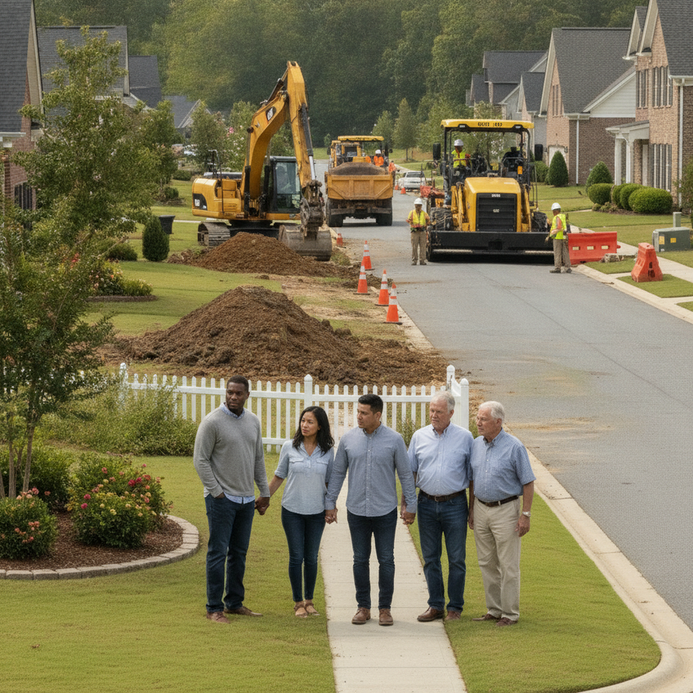
Inverse condemnation in North Carolina cities and towns usually comes up when a public project impacts your property, but nobody files an official eminent domain case. Instead, the effects might sneak up on you. Here are some common ways it can happen:
- A city widens a road, and suddenly part of your yard is gone.
- New water or sewer lines are installed, damaging your driveway, landscaping, or underground pipes.
- Flooding from a new municipal storm drain causes your basement to fill with water every time it rains.
- Construction of a new public facility, like a fire station or park, creates more noise, traffic, or loss of privacy, lowering your property’s value.
- The city blocks your driveway or access to your property during a major infrastructure project, hurting a business or making your home hard to reach.
In each of these cases, the city or town might not go through the formal eminent domain process. But if your property is damaged or taken for a public purpose, you can use GS 40A-51 to seek compensation.
The key factor is whether your property has suffered a real, measurable loss because of something the government did for the public. This doesn’t just mean land physically taken away; it can include things like repeated flooding, blocked access, or permanent utility easements that weren’t part of the original property deal. If you notice a change that affects your property’s value, use, or enjoyment, it’s worth asking whether inverse condemnation might apply.
Understanding Your Rights Under GS 40A-51
Many property owners don’t realize they have rights when public projects affect their land. GS 40A-51 spells out those rights clearly for North Carolina residents.
First, if you believe your property has been taken or damaged for a public use, you can file a lawsuit against the city or town. The court will decide if a taking has really happened. If it has, the city must pay you the fair market value of the property that was taken or damaged.
It’s important to understand that this isn’t just about losing your entire property. Even if only a small part of your land is impacted, or if the value of your property drops because of a public project, you may still have a claim. This includes situations where something like noise, pollution, or blocked access makes your property less usable or enjoyable. For example, if the city reroutes traffic and now your business is almost impossible for customers to reach, the resulting drop in value could form the basis for a GS 40A-51 claim.
Another key right under GS 40A-51 is the ability to seek compensation for partial takings or damages. Let’s say only a strip of your land is used for a sidewalk, or an underground utility easement is placed beneath your yard. Even though you still own the rest of your property, you’re entitled to be paid for the portion that’s taken or affected. The law is designed to be fair, making sure you aren’t left worse off just because of a public project.
The Inverse Condemnation Process Step by Step
If you think your property has been taken under 40a 51 inverse condemnation North Carolina law, here’s what the process looks like:
- Document what happened. Take photos, keep records, and note the date any changes or damage first appeared. Save repair bills, property tax records, and any communications you have with the city or contractors.
- Try contacting the city or town. Sometimes, local officials will work with you to resolve the issue. If that doesn’t work, move to step three.
- File a lawsuit in your county’s Superior Court. This is where you officially ask the court to recognize that a taking has occurred. You’ll need to explain what happened, provide evidence, and show how the government’s actions have affected your property.
- The court reviews evidence from both sides. You might need expert opinions (like appraisers or engineers) to show the impact on your property. For example, an appraiser can estimate how much value your property lost, or an engineer can prove how city construction caused flooding or damage.
- If the court agrees with you, it will decide how much compensation you’re owed. The compensation is based on the fair market value of what was taken or the loss in value to your property.
This process can feel overwhelming, especially if you’ve never dealt with the legal system before. Many property owners hire an attorney who focuses on eminent domain or property rights to help them through these steps. Having professional help can make a huge difference, since the city will likely have its own lawyers and experts.
It’s also important to act quickly. North Carolina law sets time limits for filing an inverse condemnation claim, generally, you must act within three years of discovering the taking or damage. Missing this deadline could mean losing your right to compensation, so don’t wait if you think your property has been affected.
Common Examples and Real-World Scenarios
To make sense of 40a 51 inverse condemnation North Carolina, let’s look at a few examples you might see in your city or town:
Imagine a city builds a new sidewalk that pushes the curb into your front yard. You didn’t get a notice, and nobody offered you money. Later, you find out your property line is now several feet closer to your house. This is a textbook case where you could use GS 40A-51 to claim compensation.
Or consider a business owner whose parking lot floods every time the city upgrades a nearby stormwater system. If the water damage lowers your property’s value or makes your business less accessible, GS 40A-51 can help you seek payment for your losses.
Here’s another real-world situation: A city installs new sewer pipes and places a permanent utility easement over part of a homeowner’s backyard. The homeowner can no longer build a shed or plant trees in that area, and the property’s value drops. Even though the land wasn’t totally taken away, the homeowner may have a strong GS 40A-51 claim for the loss in use and value.
Sometimes, the impact is less obvious but still serious. Maybe a city project creates so much noise or dust that it’s hard to live or work on your property. Or maybe road construction blocks customers from reaching your shop for months at a time. These aren’t just inconveniences, they may qualify as a taking or damaging of your property if they’re ongoing and substantial.
It’s not always easy to spot when you have an inverse condemnation claim. If you notice lasting changes to your property or business after a city project, it’s a good idea to seek advice. Don’t assume you’re powerless just because the government didn’t file formal paperwork.
Challenges Property Owners Face (And How to Overcome Them)
Dealing with inverse condemnation isn’t always straightforward. Cities and towns sometimes argue that no taking occurred, or that the loss isn’t significant enough to require payment. Here are some common challenges and ways you can respond:
- Proving a “Taking.” The court needs evidence that the government’s actions actually took or damaged your property for public use. Keep detailed records, photographs, and expert opinions. For instance, before-and-after photos can be powerful evidence, as can letters from neighbors who witnessed the changes.
- Valuing Your Loss. You’ll need to show how much your property lost in value. Appraisals and real estate experts are key here. Sometimes it takes more than one expert to fully explain the loss, especially if it involves business revenue or unique property features.
- Legal Deadlines. North Carolina has time limits for bringing a claim. Don’t wait too long to take action if you think your rights have been violated. The three-year statute of limitations usually starts when you first notice the impact, not when the project began.